History
The way they interpreted this land, used it, and respected its intrinsic values adds a layer of history that is a fascinating foundation to the story of this place. This foundation is not lost but understanding it is difficult for many of us, who are unfamiliar with the lore and culture of the first peoples. A little more of the indigenous history of this region can be found on the Waratah-Wynyard Council’s website here.
We hope to add to this and shed a little more detail on this history on these pages and are in the process of respectfully gathering these insights. We will share them when we can.
In relation to the areas European History, the Wynyard Historical Society was kind enough to share the following insights:
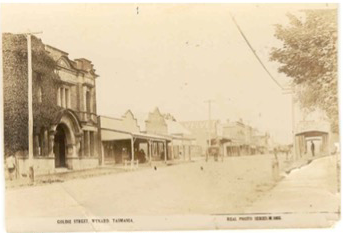
Goldie Street was named after Alexander Goldie, who was an agriculturalist with the Van Diemen’s Land Co. Born in Scotland, Goldie arrived in Hobart Tasmania in 1826, and later that year came to Circular Head. With Joseph Fossey, he explored the area between Circular Head and Cape Grimm and named the Duck and Detention Rivers.
Goldie resigned his position at the VDL Co after he was accused of failing to prevent his men from shooting at Aboriginals following an incident when an Aboriginal woman was killed by men working under him. He was eventually cleared of this and was offered reinstatement of his position, but he refused.
He later managed the estates of Owen and Lord at Lawrerry and Orielton before purchasing a property near Richmond in 1846. He became a Justice of the Peace in 1848, retired in 1851, sold his properties, and moved to Victoria in 1863.
Goldie died in Sale, Gippsland Victoria, in 1889 aged 89 years, survived by a widow and eight children.
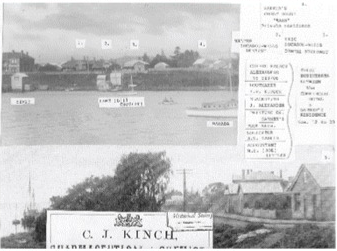
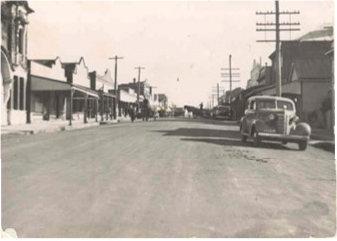
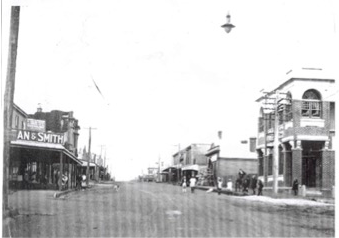
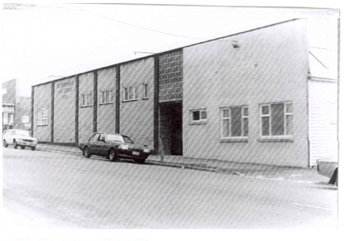
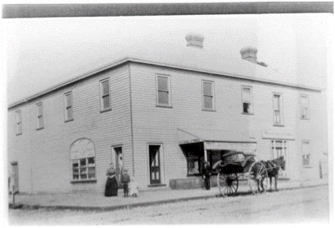
Originally Goldie Street started from the junction of Hogg Street, and the street eastward from there to the Camp Creek bridge was called the Esplanade. The original shops and businesses of Wynyard were mainly centred on the Esplanade, but by the early 1900s, as the town grew, the shops spread westward, and Goldie Street became the main shopping centre.
In about 1972 the name Esplanade was removed, and Goldie Street was re-numbered from the bridge.
Local shops and services
This Pause Place is right in the heart of Wynyard’s many shops, cafes, pubs, restaurants and community services. There is a nearby bus-stop a short walk away on Jackson Street (turn towards the arch and then first left). Click here for bus times.